
Shortcuts
by Chad Pickard
There's a local trail I love to ride. If you can imagine a ski hill on the plains of South Dakota, you're halfway there. Our local ski hill has 250 feet of vert. Over the last few years the local mountain bike club has been raising funds to cut in over 10 miles of single track. Phase one is done. Phase two starts next spring.
My goal last time out was to ride for two hours. Not fast, not slow, not a specific zone. Two hours. If I ride every loop once with some overlaps that's about six miles. In my head that meant 18ish miles total, with everything ridden three times.
Here's what kept grabbing my attention. Every time I came across a trail that headed to the parking lot, my brain would tell me I could cut out early and be back at the car. My stupid brain can't get out of its own way. Two hours is how long I was planning on riding. You can't shortcut time. Had I taken that shortcut I would have done myself a disservice to my peak physical fitness. That got me thinking about shortcuts in our businesses.
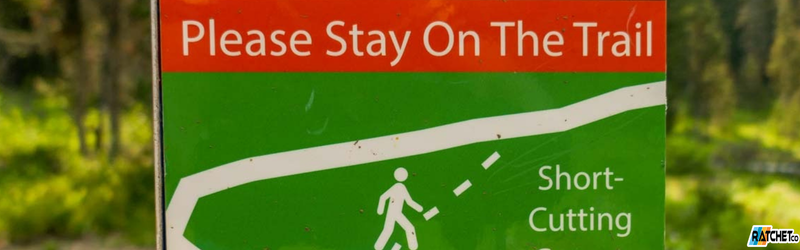
Your brain has one job: stay alive and burn as few calories as possible. When you're drowning, your brain is screaming for relief. Right now. So you take a shortcut. Skip the reference check because the candidate has bike experience. Do the work yourself because it's faster than coaching. Let a rep create an order because you don't have time to manage it. Use a placeholder SKU because you'll figure it out later.
Each one saves you today. Each one costs you tomorrow.
Here's the part that killed me in my own business: I know it was a shortcut when I took it. I wasn’t fooling anyone. I was tired and was betting that I would have time to fix it later. Guess what? I wouldn’t.
These shortcuts aren't isolated mistakes. They're a pattern. And that pattern is the reason you're stuck at your current size.
You can't hire better because you never built an onboarding process. You're doing the work yourself instead of coaching because it's faster, which means nobody on your team gets better. Your reps create orders without your sign-off because you never defined what happens before an order goes live. Your inventory is a mess because you use placeholder SKUs instead of doing the work to get real part numbers.
You're not growing. You're treading water. And every shortcut you take makes the water deeper.
Here's what's really happening: You don't have a plan. You don't have good data. You're relying on vendors and reps to tell you what to order and when to order it. They're not giving you that. They never were. They want prebooks and payment terms that work for them, not for you. So you're operating blind. And when you're operating blind, you shortcut. Every time.
That's not a character flaw. That's information. You're missing the business knowledge you need to make real decisions. That's fixable. But it requires you to stop drowning and start building.
The hard work is the opposite. Reference checks take time. Coaching takes time. Creating a process for orders takes time. Getting real SKUs takes time. Building forecasts and plans takes time. But here's what happens when you actually do it: you don't have to redo it. Your team gets better. You stop being the bottleneck. You get time back. You can actually scale.
I spent years taking shortcuts. Thought I was being efficient. Turns out I was just staying small.
So here's what you do.
Pick one shortcut you take regularly. Not all of them. One. The one that creates the most friction in your business right now.
Now bring it to your manager or your buyer. The person closest to that problem. Tell them what you see. Then ask them: What stops this from happening?What does the process actually look like?
Don't tell them the answer. They see things you don't. They're in it every day. They know where the friction is. They know what would work and what won't work in your culture. Work on it together. This isn't their project. It's yours. But they're part of the solution.
Figure out the trigger. When does the shortcut happen? Booking season? End of the day? When you're behind on something else?
Figure out what stops it. What's the boundary? What's the rule?
Figure out what happens instead. What's the actual process?
Then write it down. Not in your head. Write it. Share it with your team. Make it repeatable.
Review it in two weeks. Not someday. Two weeks. Adjust what isn't working. Tighten what is. That's when shortcuts actually die.
Two weeks from now, rep orders aren't a surprise showing up in April. You're not thinking about it at 11 PM. Your team knows what to do without asking you. Your inventory isn't chaos. That's what the hard work buys you.
Not time. Relief.
The hard work is hard. That's exactly why you avoid it. But it's also the only thing that lets you grow. And when your team helps design it and you review it in two weeks, that's how you know it's actually going to stick.
What's one shortcut you're going to kill this booking season?
I help retailers identify and fix the shortcuts that keep them underwater. Most owners can't see them alone. Schedule a call and let's find yours.