
People Love Bikes. Do They Love Tech Talk?
I've been home seven days and I think I've finally recovered from the long days of turning wrenches on RAGBRAI. It's the largest bike event in the United States. More than 25,000 cyclists show up. Maybe less than 50,000 but it's a lot. They start by dipping their tire in the Missouri River with the hopes of pedaling all the way to the Mississippi River and dipping their tire once again.
If you've never been, consider going. Ride a couple days. Volunteer. Just post up on a corner to watch thousands of cyclists file into a small Iowa town on a hot summer day with miles of corn as the backdrop.
This might surprise you but a lot of them don't know much about their bike. That's not a bad thing.
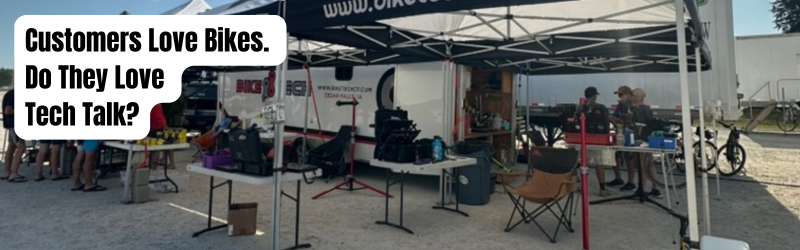
But here's what I noticed. Someone told me they were from Madison. I thought Madison, South Dakota. Small town. I knew it. But I didn't know there's a Madison in Iowa. To them, Madison Iowa was obvious. To me, it wasn't. I was looking through my own lens.
This is exactly what happens in bike shops.
Your job isn't to make them understand bikes. Your job is to make sure they love their bike.
A customer comes in. Their bike is making a noise. They want to know: is it safe to ride? You hear derailleur and launch into cable tension, indexing, limit screws. Their eyes glaze. They're still on the first question. You've jumped three steps ahead.
Then watch. If they ask how it works, go deeper. If they just want to know if it's safe and want to leave, let them leave.
A kindergarten teacher doesn't use the same words with kids that she uses with parents or other teachers or the principal. She's not dumbing things down. She's adjusting her language to the audience. Your bike tech needs to do the same thing.
This is where your team comes in. Brief them before the shift. Not a two-hour training. A thirty-second conversation.
"When someone comes in with a bike problem, start with their question. Answer it. If they ask for more, go deeper. If they don't, we're done. You've done your job."
That's it.
Pay attention to your next customer conversation. Watch for the moment when you're explaining something and their eyes glaze. That's usually where you've jumped to your lens and left theirs behind.
You're in the technical lens. They're still in the "is this a problem?" lens.
Start noticing it. Look for the moment their eyes glaze. That's where you jumped to technical language before they were done asking the question.
I've been on your side of the counter. I know your chaos. Let me hear your business through your lens so you can see what you can actually change. Schedule a call.