
Yesterday a lot of bike stores posted a photo of a mechanic at a workstand. Maybe yours was one of them. If you joined the National Bicycle Dealers Association (NBDA) Change the Feed pilot, thank you. If you missed the email or are wondering what the heck is going on, check nbda.com or reach out to the NBDA directly. There’s still time to get in on Monday’s post.
What I like most is the idea behind it. The email went to retailers, which makes sense, since the NBDA is their voice. But the idea is bigger than one inbox. Suppliers, distributors, reps, nonprofits and riders all have a stake in specialty retail doing well. This industry spends a lot of energy pulling in different directions, and it’s rare to see a reason for everyone to push the same way on the same day.
If you’re a brand, rep or distributor and this is the first you’ve heard of it, you probably won’t be posting. But you talk to more shops in a week than most of us do in a month. Mention it. The next posting day is Monday, November 16, and the full launch is in December.
Read the campaign’s mission and one phrase jumps out: remind consumers why supporting local matters.
Remember the Buy Local sticker? It was on window clings, shop counters and the back of half the cars in the parking lot. Maybe I’m just the crotchety former shop owner now. “We didn’t do it that way when I had my business.” Except we did. Most of us had that sticker somewhere. And it never said much on its own.
It had no punctuation at all. The way it got used, it landed like a period. Buy Local. Full stop. It’s an ask, and it assumes being down the street is reason enough. Your customers stopped accepting that years ago. They have a phone in their pocket that will put a bike on the porch by Thursday.
What the sticker was always missing is a semicolon. Buy Local; and then the reason. A semicolon tells you the sentence isn’t finished, and whatever comes after it has to justify the first half.
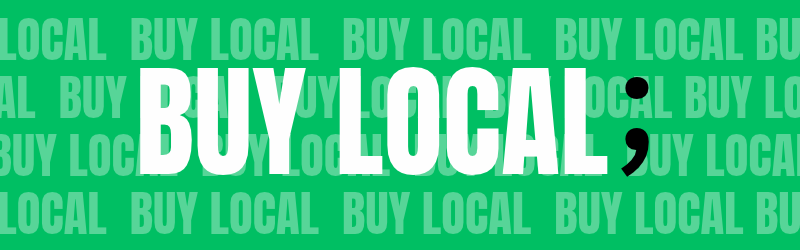
You write that second half. The hashtag doesn’t, and neither does your brand rep or the association. You write it every day, mostly when nobody is posting about it.
Your customers want what they want when they want it. That isn’t a complaint about customers. It’s the job description.
The rider who drops off a bike Tuesday for a Saturday event wants it Friday. The parent buying a second kid’s bike wants someone who remembers the first one. The commuter with a flat at 7:40 a.m. wants to know if you can get them back on the road before work. The rider you sold a first bike, a second, and a third wants a shop that already knows what the fourth one should be.
None of that comes from being local. It comes from what you do once they walk in, and after they walk out.
And sometimes they don’t walk in at all. That same phone in their pocket can show them what’s on your floor, hold it, or buy it from you before they ever leave the couch. If your inventory isn’t online, the phone only works for the other store.
A coordinated post can get someone through the door. What happens after that decides whether they come back, and whether the next sticker they see reads as a promise or a plea.
So when the posting is done, the work is still there:
How far out is your service queue today, and does the customer hear that number before they hand you the bike?
When a repair finishes early, does someone call, or does the bike sit on the hook until pickup day?
Does a Saturday walk-in get greeted in the first minute, or after someone finishes a phone call?
Do you know which bike this is for them? First? Third?
If a customer searched for a bike you have in stock right now, would they find it on your website, or on someone else’s?
If the queue is three weeks out and nobody calls when the bike is done, the campaign brought that customer in just to prove the period version right.
The campaign starts the sentence. Your shop finishes it.
You can answer those questions yourself. The bigger one, only your customers can answer.
Before the full launch in December, ask five of them to finish the sentence. Buy local; because what? Get past brands and prices. Ask what they want from their local bike store, what they’d miss if you were gone, and what would make them come back sooner. Their answers are your second half. Some will tell you what you’re already doing right. A few will tell you what’s missing.
If you aren’t sure what to do with what you hear, that’s what a 30-minute call is for. Schedule a Call.

I know how hard it is to own a bike store. I want to share what I learned from 30 years working in the bike industry.
Bring whatever numbers you have.