
ChatGPT Said What?
by Chad Pickard
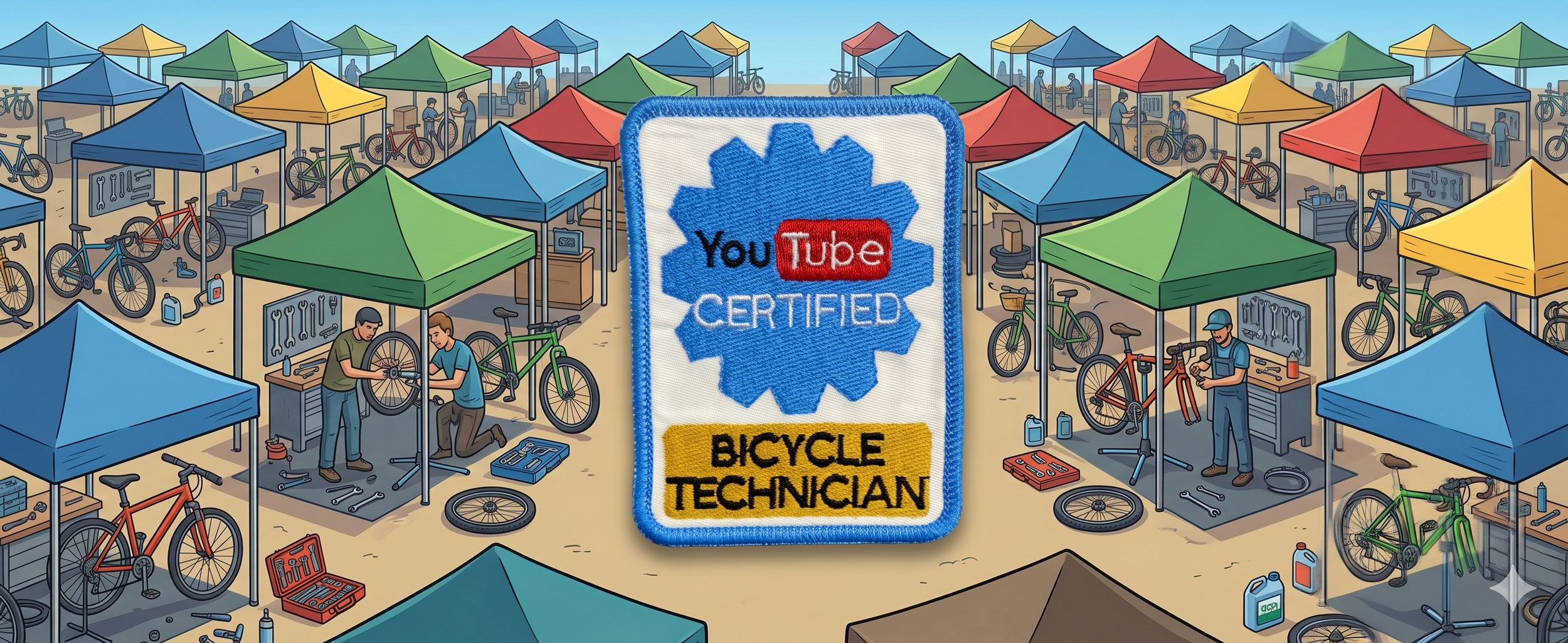
There's a patch floating around the RAGBRAI tech tents. You've probably seen it. "YouTube Certified." The guys wearing it think it's self-deprecating. It's not — it's a badge of honor, and everybody knows it.
The next patch is coming. I don't know exactly what it'll say, but my best guess involves a paid ChatGPT subscription and someone's mom's credit card.
I get it. You've spent years learning this. You've spent an hour chasing a click that's definitely coming from the bike — and it's a loose cleat. And now someone walks in and says, "Well, that's not what ChatGPT said."
Here's the thing — you're not going to out-know JARVIS. You're not going to out-know KITT. The AI isn't bluffing and it isn't going away. Fighting it on those terms is a losing argument before it starts.
But JARVIS doesn't know where this person rides. KITT never asked about the bad knee. And neither of them has ever stood across a counter from a nervous first-time buyer trying to figure out if cycling is actually for them.
That's yours. And it starts with the right question.
Most techs have to fight the urge to take apart the source — Reddit, YouTube, the neighbor who "used to race," the uncle who still thinks 7-speeds are fine, the mother-in-law (do not fight the mother-in-law — just make her think she was right and move on). The urge is to go to war with the information instead of working with the person in front of them.
Here's the reframe: ChatGPT is just the newest version of a very old problem. Customers have always walked in with outside advice. Flowrider69 on Reddit. Some guy in a Facebook group. A podcast they half-listened to on a Tuesday commute. The source changes. The dynamic doesn't.
What all of it actually means is this: the person in front of you did research.
They didn't wander into Target for hair ties and leave with a $1,000 bike. They went looking. They read things. They formed opinions. That's not a problem to overcome — that's momentum. It's the best possible thing a customer can bring through your door.
Your job isn't to win the argument. Your job is to understand — because the customer who feels understood buys, and the one who feels challenged walks.
And the first thing you need to understand is this: the source isn't wrong. ChatGPT isn't wrong. Reddit isn't wrong. Your customer's uncle who ran Boston three times isn't wrong.
They just answered a different question.
Ask a marathon runner what shoe you should buy. They'll tell you something low-drop, minimalist, close to the ground. And they're right — for them. But if you've got bad knees and your first 5K is in two months, you need cushion. The runner didn't give you bad advice. They gave you accurate advice built on their context, not yours. The problem isn't the answer. It's that nobody asked the right question first.
That's the job. Get curious about where the advice came from. For AI, that means understanding what they actually asked. The answer tells you everything the algorithm didn't know about them. For Reddit, YouTube, a neighbor, or an uncle, the question is the same in spirit: how much does this person know about your riding style and where you're actually riding?
Those questions do three things at once. They show the customer you're not threatened. They invite them to think critically about the advice without you attacking it. And they surface the context that no algorithm, forum, or well-meaning relative had access to — this rider, this terrain, these goals, this body.
That context is yours. It's what you do that nobody else can. And when you use it well, it's the difference between a customer who leaves to think about it and one who leaves with a bike.
If your instinct right now is to forward this to your employees and tell them to read it, stop. That's not coaching, that's delegating your discomfort. Schedule a huddle instead. Start with this: What's the strangest objection you heard this week? That one question will tell you more about your team's gaps than any training manual.
Great questions build more trust than great arguments. Every time.
The pace of change in this industry isn't slowing down. If your team is struggling to keep up — with AI, with customer expectations, with conversations that used to be simple and aren't anymore — that's worth a conversation. Reach out and let's talk about what's actually getting in the way.
[ Book a call ]